Address
304 North Cardinal
St. Dorchester Center, MA 02124
Work Hours
Monday to Friday: 7AM - 7PM
Weekend: 10AM - 5PM
Address
304 North Cardinal
St. Dorchester Center, MA 02124
Work Hours
Monday to Friday: 7AM - 7PM
Weekend: 10AM - 5PM
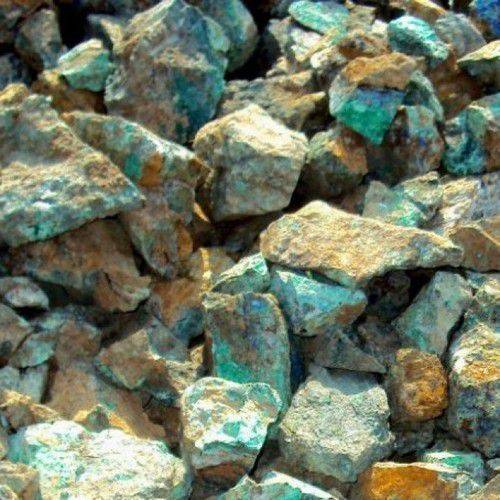
Copper is one of the most essential metals in modern civilization. From ancient tools and ornaments to advanced electrical systems and renewable energy technologies, copper has played a central role in human development. Today, it remains a cornerstone of global industry, driven by its unique physical, chemical, and mechanical properties.
Copper with a 75.5% grade represents a high-value material, positioned between raw copper ore and refined copper products. This grade offers an excellent balance between copper content, processing efficiency, and economic profitability. It is particularly attractive for smelters, refineries, and industrial users seeking reliable copper feedstock with strong metallurgical performance.
This article provides a comprehensive analysis of 75.5% copper, covering its properties, geological origins, extraction and processing methods, industrial applications, market value, and strategic importance in the global economy.
Copper (chemical symbol Cu, atomic number 29) is a naturally occurring metallic element belonging to the transition metals group. It is known for its reddish-orange color, high ductility, and exceptional conductivity.
Copper is one of the few metals that can be used in its native metallic form, although it is most commonly extracted from mineral ores and concentrates.
Electrical conductivity: Second only to silver
Thermal conductivity: Extremely high
Malleability and ductility: Can be drawn into fine wires
Corrosion resistance: Excellent, especially in atmospheric conditions
Recyclability: Can be recycled indefinitely without loss of quality
These properties make copper indispensable in modern industrial systems.
Copper grade refers to the percentage of copper content present in a given material. A 75.5% copper grade indicates that 75.5% of the total mass consists of copper metal, with the remainder made up of other elements, minerals, or compounds.
This grade is significantly higher than most natural copper ores, which typically contain:
0.5%–2% copper (low-grade ores)
5%–30% copper (high-grade ores)
A 75.5% copper grade therefore represents a concentrated or partially refined copper product.
High metal recovery rates
Reduced processing costs
Lower energy consumption during refining
Higher economic value per ton
Ideal feedstock for smelters and refineries
Copper with a 75.5% grade may originate from several mineral sources, including:
Chalcopyrite (CuFeS₂)
Chalcocite (Cu₂S)
Bornite (Cu₅FeS₄)
Malachite (Cu₂CO₃(OH)₂)
Azurite (Cu₃(CO₃)₂(OH)₂)
These minerals undergo concentration and upgrading processes to reach higher copper grades.
Natural geological processes such as oxidation, leaching, and secondary enrichment can significantly increase copper concentration near the surface, facilitating the production of high-grade copper materials.
Copper extraction depends on deposit type and location:
Open-pit mining
Underground mining
Artisanal and small-scale mining
Industrial mechanized mining
Once extracted, copper-bearing material is:
Crushed into smaller fragments
Ground into fine particles
Prepared for concentration processes
To reach a 75.5% copper grade, materials may undergo:
Froth flotation
Gravity separation
Magnetic separation (where applicable)
Further upgrading is achieved through:
Pyrometallurgy (smelting and converting)
Hydrometallurgy (leaching and solvent extraction)
Combination processes (SX-EW, roasting-leaching)
These processes optimize copper recovery while minimizing impurities.
Copper with a 75.5% grade may contain trace amounts of:
Iron
Sulfur
Oxygen
Carbonates
Silicates
Careful impurity control is essential to ensure compatibility with downstream refining processes.
One of the main advantages of 75.5% copper is its suitability for further refining:
Electrorefining
Fire refining
Electrolysis
These processes allow the production of 99.9% pure copper, suitable for high-end industrial and electrical applications.
Copper with a 75.5% grade represents a crucial intermediate product in the copper value chain. It combines high copper content with efficient processability, making it a preferred choice for industrial buyers and refineries worldwide.
In Part II, we will explore:
Industrial applications in detail
Electrical, construction, and energy uses
Global copper markets and pricing
Environmental and sustainability considerations